The code of human nature

Personality is the last
unstructured dataset.
We're building the systems
to read it.

Not through self-report. Not through surveys. Through the patterns people cannot see in themselves — observable, falsifiable, and programmable at scale.

01

Why this problem, why now

The paradox
Self-knowledge is the hardest kind of knowledge
Psychology's foundational claim is that you cannot see your own unconscious patterns. And yet every personality framework in existence asks you to report on them. The entire $20B industry is built on a structural contradiction.
The moment
Everyone wants to understand people at scale. No one has solved the input problem.
From government agencies to enterprise platforms to every AI product being built right now — the ambition to model human behaviour is everywhere. The missing piece is always the same: a reliable, structured, cognitive-level read of who a person actually is.
The gap
A system exists that solves this. It has never been formally validated.
The Objective Personality System — 512 types, 9 binary coins, observer-based — has the right methodology. It has never been peer-reviewed. That gap is a 10-year defensible position for whoever closes it first.
02

What we're building

A cognitive classification engine — trained on the Objective Personality System — that observes a person and returns a structured, machine-readable type. Not a survey. Not a self-report. An external, observer-based classification that holds up to scientific scrutiny.

The output tells you how someone processes information, makes decisions, what they need, what drives them, what they unconsciously fear, and where they're most likely to struggle — more accurately than they could tell you themselves.

Exposed as an API. Any product — government agencies, marketing personalisation at scale, content production, sales intelligence — can call it. You know who you're talking to before they tell you anything.

// POST /v1/classify
// Observer-based cognitive classification

{
  "ops_notation": "MM-TeSe-PB/C(S) #1",

  "coins": {
    "decider": "Te", // not Ti
    "observer": "Se", // not Ni
    "lead": "decider",
    "modality": "MM",
    "i_e": "extrovert"
  },

  "saviors": ["Te", "Se"],
  "demons": ["Fi", "Ni"],

  "animal_stack": {
    "1_savior": "Play", // Oe+De
    "2_savior": "Blast", // Oi+De
    "3_demon": "Consume", // Oe+Di
    "4_demon": "Sleep" // Oi+Di → extrovert
  },
  "social_type": 1
}
03

The moat

The science
Validation runs in parallel with the build
The scientific validation isn't a prerequisite — it's what makes the API trustworthy to enterprise buyers and impossible for competitors to replicate quickly. Being first to publish peer-reviewed validation of a 512-type observer-based system is a 10-year position.
The system
OPS has the right architecture. It's never been a product.
Built and refined over 15+ years by practitioners. Observer methodology, binary structure, cross-check logic — all in place. What it has never had is a research pipeline, an engineering team, or a go-to-market. That is exactly what we're adding.
The founder
7 years inside the system before building on top of it
Most people who discover OPS become enthusiasts. Abhas has been a founding community member since 2018, worked inside a personality AI company to understand what productisation looks like, and is now building the research and engineering infrastructure the system has never had.
The timing
The input problem is the most expensive unsolved problem in human intelligence
Everyone modelling human behaviour — from governments to AI labs to the largest platforms on earth — is working from incomplete data. They know what people do. None of them know who people actually are at the cognitive level. That is the problem we're solving.
04

Founder

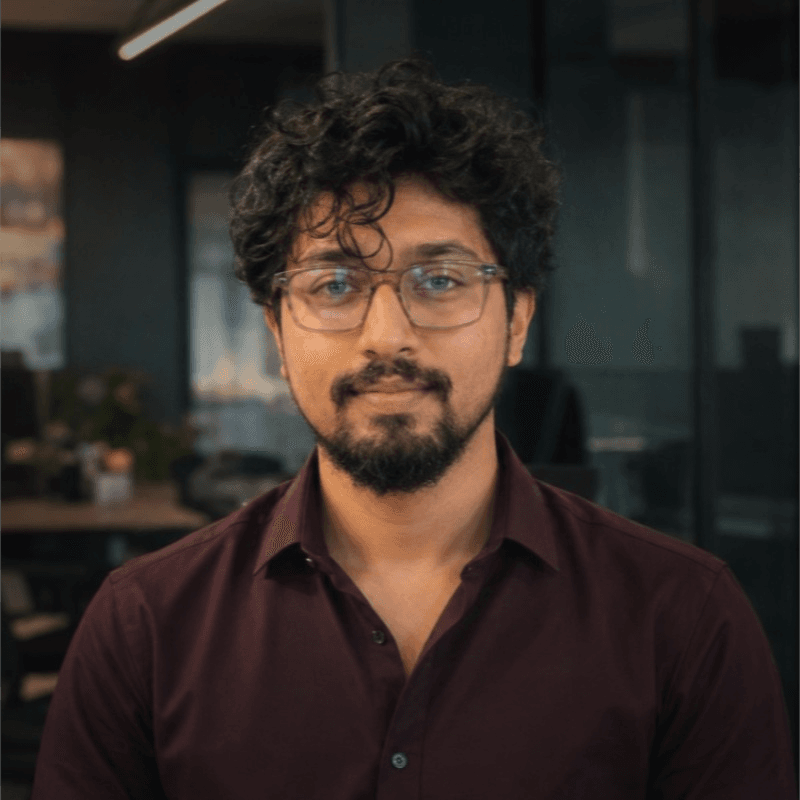
Abhas Singh
Founder · Mahakram Labs
Founders Office · Humantic AIPersonality AI. PLG, product marketing, GTM.
Founders Office · jhana.aiB2G strategy, market research, growth.
Founder & CEO · ClarityCuts0 → ₹7L/month in 10 months.
OPS Community · 2018Founding member, Facebook + Discord.

Obsessed with one question since childhood: why do people see different things in the same data? Read everything — Jung, clinical psych, philosophy of mind. Found OPS in 2018 because it was the first framework rigorous enough to take seriously.

The career has been deliberate. Built a company to prove he could sell. Went into personality AI specifically to understand what this space looks like when productized.

05

We're building the team

We don't hire for credentials. We hire for obsession.

If you've spent years unable to stop thinking about why people are the way they are — why two people see completely different things in the same data, why self-knowledge is so elusive, what the actual mechanics of behaviour look like underneath the surface — we want to talk to you.

We're building across ML research, computational psychology, and full-stack engineering. What we care about is hunger, precision, and the kind of intellectual restlessness that keeps you pulling at a problem long after a reasonable person would have moved on.

contact@mahakram.in →
Want to talk?
Email
Send a note. No forms, no friction.
abhas@mahakram.in →
Call
30 minutes. Pick a time.
Schedule →
Want to go deeper into the research and the system? Read the science